Loading...
Serving Tacoma, WA and surrounding areas. (253) 354-9370
Everything you build above ground depends on what anchors it below. We pour concrete footings in Tacoma for decks, additions, and outbuildings - with the right depth for local soil conditions, steel reinforcement, and full permit handling so your project passes inspection the first time.
Concrete footings in Tacoma are the buried anchor points that hold up structures above ground - deck posts, addition walls, outbuildings, retaining walls, and fence systems. Each footing is excavated to the correct depth, reinforced with steel rebar, and poured in one continuous operation. Most residential footing projects in Tacoma are complete within one to two days of active work, followed by a curing period before building on top.
A footing is not the same as a slab - it is a specific structural element designed to carry and transfer a load into stable soil below. In Tacoma, where clay-heavy soils shift seasonally and the region sits in a seismically active zone, footings need to be designed for both the weight above and the ground movement below. Skimping on depth or reinforcement is the most common reason footings fail - and in an older city like Tacoma, where many homes were built before modern footing standards existed, it is often the reason a homeowner starts seeing problems with an existing deck or addition years later.
When a project involves not just footings but a full structural base, we also pour the poured concrete foundations that new homes and major additions require.
If a deck post is no longer plumb - tilting rather than standing straight - the footing beneath it may have shifted or deteriorated. In Tacoma's wet climate, footings that were placed too shallow or without adequate reinforcement can heave upward in winter and settle unevenly in summer, causing visible lean over time. This is a structural issue, not a cosmetic one.
Small hairline cracks in concrete are common and often harmless. But cracks wider than a pencil tip, or cracks that seem to grow over time, can indicate footings beneath the foundation are failing. Tacoma's clay soils expand and contract with seasonal moisture changes, putting stress on footings not designed for that movement.
Any new structure that attaches to your home or carries significant weight needs proper footings before anything else is built. In Tacoma, this means a permit - so if a contractor quotes you a deck without mentioning footings or permits, that is a red flag worth taking seriously.
When a foundation shifts because footings have settled unevenly, the frame of the house moves with it. Doors and windows that suddenly stick, will not latch, or have visible gaps at the corners are often the first signs a homeowner notices. This is especially worth investigating in older Tacoma homes built before modern footing standards were in place.
We pour concrete footings for residential decks, home additions, detached garages, retaining walls, outbuildings, and fence posts throughout Tacoma. Every project begins with a site visit where we assess soil conditions, check for underground utilities through the Washington 811 call-before-you-dig service, confirm the required depth and diameter for each footing, and give you a written estimate before any digging starts. We submit permit applications to the City of Tacoma, coordinate the footing inspection, and protect fresh concrete from Tacoma's rain during the curing period - including curing blankets and protective sheeting when the weather calls for it.
Steel rebar is embedded in every load-bearing footing we pour - this is not an upgrade, it is standard practice for any footing that needs to carry weight and handle ground movement. Washington State's seismic design requirements mean footings here need to resist lateral forces from earthquakes, not just the vertical load above. We also assess existing footings on older Tacoma homes before quoting any addition or attachment project, because adding a new structure to a foundation that cannot support it creates more problems than it solves. For larger structural projects, we pair footing work with full foundation installation when the scope calls for it. For slabs that have settled rather than cracked through, our foundation raising service may be the right first step before addressing any structural footing work.
For homeowners building a new deck or replacing a failing one who need footings dug to the correct depth, reinforced, and inspected before any framing begins.
For Tacoma homeowners adding living space or an accessory dwelling unit who need footings that tie in correctly with the existing structure and pass city inspection as part of an addition permit.
For detached garages, workshops, and outbuildings that need a solid, permitted footing system designed for Tacoma's soil conditions and seismic requirements.
For Tacoma homes built before the 1960s where original footings may not meet current depth or reinforcement standards, assessed and replaced before a renovation or addition begins.
Tacoma's clay-heavy glacial soils are a significant factor in any footing project. Clay soil holds water and shifts seasonally - it expands when wet and contracts when dry. That movement puts stress on footings that were not dug deep enough or wide enough to reach stable soil below the clay layer. In older Tacoma neighborhoods like Hilltop, South Tacoma, and areas near the Puyallup River valley, clay content is especially high, and footing depth that would be adequate in sandier soil may not be sufficient here. We account for local soil conditions in every project estimate - not as a line item, but as a baseline assumption that shapes every design decision.
Tacoma also sits in a seismically active region. Washington State's building code requires footings in this zone to be designed with lateral force resistance in mind - meaning rebar configuration and connection details that go beyond what is required in lower-risk areas. This affects cost, but it is not something we treat as optional. Homeowners in Federal Way and Auburn face the same soil and seismic conditions, and we apply the same standards to footing work throughout the South Sound area.
Washington State requires contractors to call 811 before any excavation to locate underground utilities. The Washington 811 call-before-you-dig service is part of our standard process on every footing project. The City of Tacoma Planning and Development Services handles permits and inspections for structural footing work in the city.
We visit your property, check access for equipment, assess soil conditions, confirm footing locations and depths, and give you a written estimate that includes whether a permit is required. We reply within one business day of your inquiry. No ballpark numbers over the phone for structural work.
We submit the permit application to the City of Tacoma and coordinate the required footing inspection, which happens before any concrete is poured. City review typically takes a few weeks. This step protects you - an inspector confirms the work is correct before it is buried.
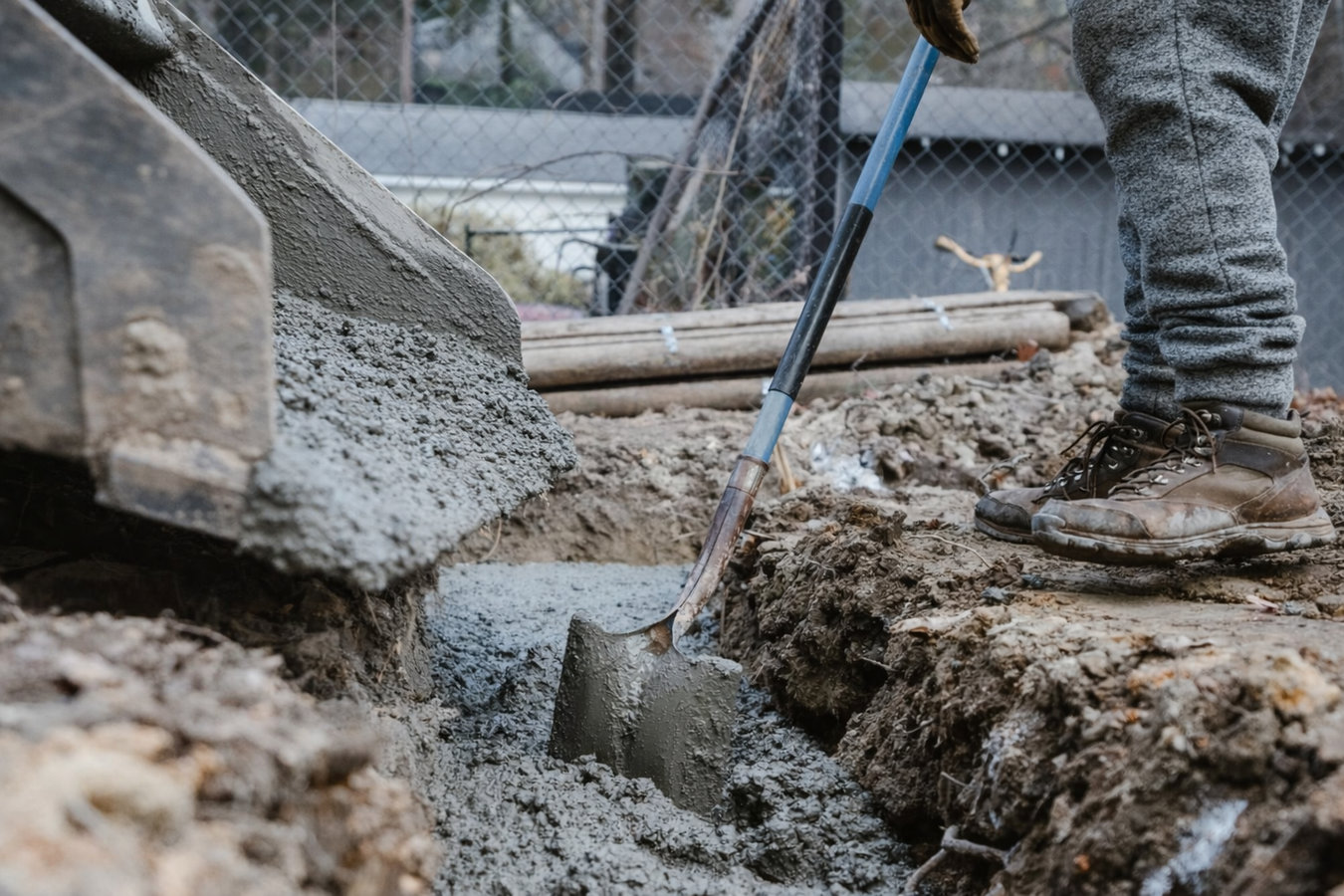
After 811 utility locating, the crew digs to the required depth, sets any tube forms needed, and places rebar reinforcement inside before the pour. This phase can be completed in a single day for most residential footing projects. The site will look disrupted temporarily - that is normal.
Concrete is poured, consolidated, and finished. In Tacoma's rainy months, we cover fresh concrete with protective sheeting or blankets to keep rain and cold off the surface while it sets. Wait at least seven days before building on top - longer in cooler weather. We give you a specific timeline based on your pour date and conditions.
Free written estimate, no obligation. We visit your site, assess the soil, and give you a clear quote that includes permit and inspection costs.
(253) 354-9370Tacoma's clay-heavy soils in neighborhoods like Hilltop, South Tacoma, and the Puyallup River valley require footings dug deeper and reinforced more thoroughly than many contractors account for. We assess your specific soil before we quote, not after we dig, because the cost of getting this wrong shows up years later in a structure that shifts, tilts, or pulls away from the house.
Living in the Puget Sound region means the Cascadia Subduction Zone is a real consideration for any structural work. We design and pour footings with the rebar configuration and connection details Washington State requires for lateral force resistance - not as an optional upgrade, but as the baseline for every footing we pour. American Concrete Institute standards guide our mix design and reinforcement specifications.
The City of Tacoma requires a footing inspection before concrete is poured on any permitted structural project. We submit the application, schedule the inspection, and coordinate the timeline so your project does not stall waiting for city review. Homeowners who hire contractors unfamiliar with Tacoma's permit process often experience delays and rework - we prevent that by handling it correctly the first time.
A large share of Tacoma's housing stock was built before 1960, and many of those homes have original footings that predate modern standards. Before we quote any addition or deck attachment on an older home, we assess what is already there. Adding a new structure on top of footings that cannot support it is a problem we prevent by looking first - not a discovery we make after framing has started.
Concrete footings are one of the least visible parts of any construction project and one of the most consequential. Every deck, addition, and outbuilding we are involved with in Tacoma starts with the foundation work done correctly - because that is what everything built above it depends on.
When an existing foundation has settled or shifted, foundation raising restores the level and structural integrity that newer footings alone cannot address.
Learn MoreFull poured concrete foundation walls for new homes and major additions, including seismic reinforcement, waterproofing, and permit coordination throughout Tacoma.
Learn MoreConcrete footing projects need city permits, and review takes a few weeks. Reach out today to get on the calendar before your project window closes.